
October 26, 2025—El Fasher, Sudan, fell to the Rapid Support Forces (RSF) after an 18-month siege against the Sudanese Armed Forces (SAF). This power shift is significant: El Fasher’s collapse represents the SAF ceding its last major outpost in Darfur, Sudan’s primary region of ethnic cleansing and violence, leaving the city dangerously vulnerable. After his recent visit to Sudan, Tom Fletcher, the United Nations (UN) Under-Secretary-General for Humanitarian Affairs and Emergency Relief Coordinator, referred to El Fasher in a social media post as “the epicentre of human suffering in the world.”
With El Fasher’s fall, Sudan transitions into a new era of battle, the nation’s third civil war in under a century, known to be the world’s most severe humanitarian crisis. The Yale Humanitarian Research Lab’s executive director, Nathaniel Raymond, described in an article for the Yale Daily News the killing through the lens of Yale’s Sudan contacts. “Individuals on the ground sent a message that reached us Monday morning that 1,200 were dead,” he said. “By that evening, they said 10,000. By Tuesday, we couldn’t reach them anymore. We assume our ground contacts are dead.” Reports have also indicated that people trying to flee the city are still being shot at and abducted.
Origins of the Conflict
The conflict commenced on April 15, 2023, after heavy sounds of gunfire rang through the Nile River-bound capital city of Khartoum, marking the initial shots of war. Fought between the RSF and SAF, also referred to as the Sudanese army or “the army,” for control over the nation, the conflict has been extremely deadly—according to estimates by the New York Times, there are as many as 400,000 casualties.
Both the RSF and SAF have greatly exacerbated Sudan’s women’s rights, destitution, and cultural division crises, all contributing to Sudan’s being “one of the worst humanitarian nightmares in recent history,” Fletcher said.
Born from the Janjaweed, the RSF is an Arab-majority militia initiated to suppress southern Sudanese rebels and fight in the 2003 Darfur War—a war with over 300,000 casualties, condemned by the International Criminal Court (ICC), and recognized by the US as a genocide. The RSF is led by Mohamed Hamdan “Hemedti” Dagalo, one of the wealthiest men in Sudan, who amassed his wealth through Sudan’s gold trade. Notably, the RSF is not a rebel group; it is recognized by the government and, at one point, was even considered part of state power.
The current conflict stems from decades of oppression and unrest. Sudan gained sovereignty in 1956 from joint colonial rule under Egypt and the United Kingdom, known as the Anglo-Egyptian Condominium. Shortly after gaining independence, an internal divide between the wealthier—largely Arab and Muslim—North and the less developed—mainly Christian, or animist—South, sparked the first two civil wars, one from 1955 to 1972, the other from 1983 to 2005.
The latter overlapped with Omar al-Bashir’s deeply oppressive dictatorship from 1989 to 2019, after he seized power in a military coup. His regime was one of the most unjust periods in modern Sudanese history, largely characterized by his brutal interpretation of sharia—Islamic law. Despite holding an international arrest warrant issued by the ICC, al-Bashir has not been convicted, and even won consecutive elections in 2010 and 2015. In April 2019, he was overthrown jointly by the RSF and SAF, leading to the establishment of a transitional government led by economist Abdalla Hamdok and a brief period of transition towards democracy in Sudan, marked by civilian protests. This was met with heavy resistance from the RSF and SAF, leading to the 2019 Khartoum Massacre. Subsequently, the transitional government was once again overthrown by the RSF and SAF. Since then, there has been no formal leadership.
While the SAF and RSF initially intended to rule the nation in unison, this partnership quickly collapsed due to disagreements over leadership, instead escalating into the current, reckless power struggle for control.
“What there is, is a long history of total disregard for civilian life,” UC Berkeley professor Bruce S. Hall said, referring to Sudan’s tumultuous past.
Figures
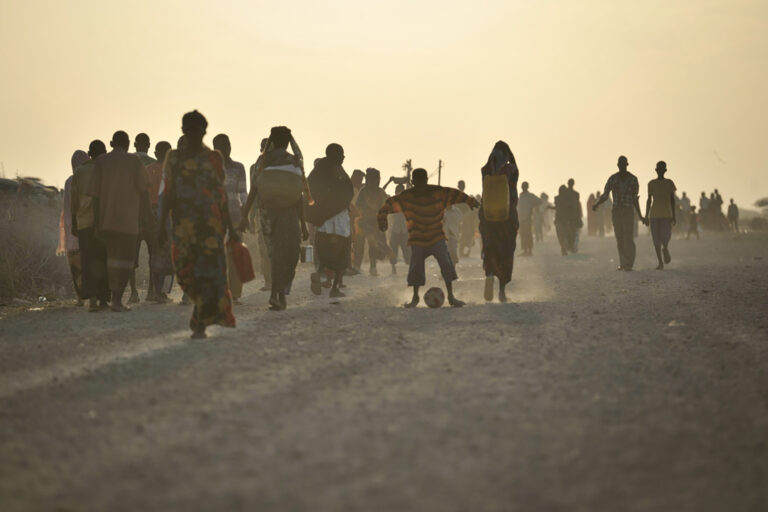
Ranked as the country with the highest rate of internal displacement in the world, Sudan has over 13 million people—a majority of children—who have been displaced. Most of them have been relocated multiple times, making them refugees within their own country. Over 3.3 million Sudanese have fled to neighboring states, including Chad, Ethiopia, Egypt, and South Sudan. However, refugee camps in these regions are severely overcrowded, leading to many asylum-seekers being denied entry and forced to return to a war-torn homeland. According to Amnesty International, in early 2024, an estimated 800 Sudanese refugees were unlawfully expelled from Egypt as part of its cooperation with the European Union to curb Sudanese migration to Europe.
Sudan is currently experiencing the world’s largest hunger crisis, with approximately 25 million people facing acute hunger and severe starvation, due to a halt in agriculture and both warring groups obstructing humanitarian aid. As stated by the UN, both the RSF and SAF are utilizing starvation as a “weapon of war.” The SAF has blocked off relief workers’ access to in-need areas, while the RSF has repeatedly looted humanitarian supplies.
90 percent of Sudan’s population remains inaccessible to aid, and with the country’s trade routes additionally disrupted, essential resources remain devastatingly out of reach. As a result, in several locations—especially areas populated with refugee camps—famine has been officially declared by the UN.
Meanwhile, the nation is deeply struggling medically. Cholera, malaria, measles, and dengue fever outbreaks have circulated through the country, while hospitals—already under strain due to electricity shortages and medical facilities being attacked—face serious supply shortages. The World Health Organization has established that Sudan’s healthcare system is on the brink of collapse. Two-thirds of the main hospitals are now closed, while there have been nearly 200 attacks on healthcare workers and facilities since the start of the conflict. As millions struggle to survive without food, water, shelter, or medical care, the war has triggered a full-blown humanitarian catastrophe.
Amidst this chaos, both the SAF and RSF have been accused of committing widespread atrocities, showing little regard for civilian lives. “There’s no good guy in the fight,” Prof. Hall said. The conflict has reignited centuries-old histories of oppression and ethnic cleansing in Darfur, with the RSF and allied militias targeting non-Arab Masalit ethnic minority communities. The UN estimates that at least 15,000 people were killed in ethnic attacks in 2024 alone.
In early January 2025, the former US Secretary of State, Antony Blinken, declared that the RSF is committing genocide. Despite the deep-seated implications of the word genocide, this declaration has been the cause of little change. “It’s a myth that the term is really powerful—at least in terms of garnering policy change,” UC Berkeley professor Scott Straus said.
That said, the brutality has continued. A study conducted in October 2025 by the Yale School of Public Health’s Humanitarian Research Lab used satellite imagery analysis to find evidence consistent with the RSF’s alleged mass killings, following the capture of El-Fasher. As shown in the imagery, areas of Earth are discolored red and covered by what appears to be mounds of bodies. Filippo Grandi, UN High Commissioner for Refugees, cautioned that current violence mirrors the Darfur War.
The civil war has also deepened Sudan’s women’s rights crisis. While the country holds a long history of forced child marriages, sexual slavery, and female genital mutilation, since the conflict began, gender-based violence has surged by over 50 percent, according to the UN. An estimated 260,000 women are currently pregnant—many as a result of rape—most without access to medical care. Furthermore, in July, the UN warned that 12 million Sudanese women and girls now face an increased risk of sexual violence due to the war. “Women’s bodies become a crime scene in Sudan. There are no safe spaces that are left, nowhere for women to gather safely, to seek protection or even access even the most basic psychosocial care,” the UN Women Regional Director for East and Southern Africa, Anna Mutavati, said.
International Involvement
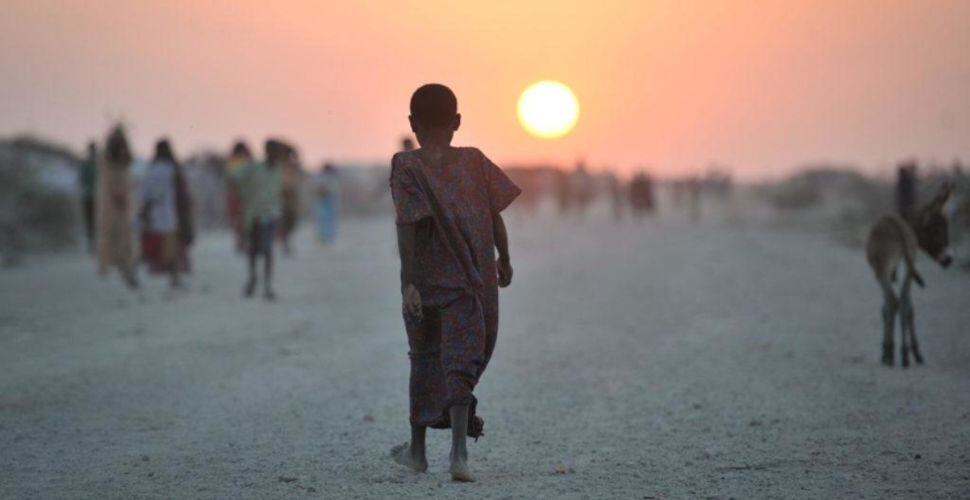
On a global scale, several international powers have gotten involved in the conflict, notably “The Quad,” comprising the US, the United Arab Emirates (UAE), Saudi Arabia, and Egypt. The Quad has unified in efforts to broker peace, with the US and Saudi Arabia overseeing multiple ceasefires. The US has also imposed visa restrictions on Sudanese military leaders and sanctioned businesses supporting both factions, preventing the conflict from spreading beyond Sudan’s borders.
In 2024, the US was Sudan’s largest single donor, contributing both direct aid and funding for the UN’s humanitarian efforts. Meanwhile, European nations have also offered support. At a donor conference in Paris, the European Union committed €350 million, the United Kingdom pledged $110 million, and the US offered an additional $147 million. Lastly, France and Germany contributed €110 million and €244 million, respectively.
Regardless of international support, fundraising efforts have still fallen short. Only 35.4% of the 2025 Sudan Humanitarian Needs and Response Plan’s required $4.16 billion has been funded.
Several efforts to negotiate peace have also repeatedly failed. On March 8, 2024, the UN Security Council passed a resolution calling for an immediate ceasefire. While the SAF agreed to indirect negotiations with the RSF, mediated by Libya and Turkey, the talks collapsed a mere three days later when a top SAF general rejected a Ramadan ceasefire, demanding that RSF forces withdraw from civilian areas first. The SAF has also severed ties with the Intergovernmental Authority on Development, an East African bloc pursuing alternative peace strategies.
Humanitarian aid aside, foreign military involvement risks exacerbating the conflict. UN experts have found credible evidence that the UAE supports the RSF, as they have supplied arms to the RSF. Likewise, Iran is suspected of providing weapons to the SAF, and the Wagner Group—a state-funded Russian military company—is supplying weapons and assisting both sides, in exchange for gold. Amnesty International also claims to have found evidence of firearms manufactured in Serbia, China, Turkey, and Yemen being used in Sudan.
As a result of UAE support, billions of dollars worth of Sudanese gold have been illegally flowing into the nation’s borders through a smuggling route via Chad, creating a controversial dynamic: a country involved in brokering peace is simultaneously profiting from the conflict. Gold, a primary commodity in Sudan, has become easier to mine during the war as the breakdown of state authority and regulatory oversight allows armed groups and smugglers to operate extraction sites with impunity, thus attracting international actors seeking profits amid the chaos. While most nations have denied allegations of profiting from Sudanese gold, global concerns over external interference continue to mount as foreign influence deepens the rivalry at the heart of the conflict.
Political changes in countries formerly contributing to the conflict have also disrupted Sudan’s international aid. In early 2025, US President Donald Trump’s administration halted 90% of USAID contracts, withdrawing Sudan’s once-largest source of humanitarian assistance. The funding freeze, implemented under the Department of Government Efficiency, led to the closure of 80% of emergency food kitchens in Sudan, affecting over two million people and exacerbating the hunger crisis. Furthermore, in Sudan’s West Kordofan region, female health services have collapsed entirely. Across the country, displaced women are no longer able to access hygiene kits, further exacerbating the humanitarian situation.
“The world is busy with other countries,” Bashir Awad, a resident of the city Omdurman, said. “We had to help ourselves, share food with each other, and depend on God.”
While Sudan is experiencing the world’s worst humanitarian crisis, it has remained largely invisible on the global stage. Despite this immense suffering, Sudan has received merely a fraction of the international attention and resources, which have been devoted to other current conflicts. Media coverage analysis shows that Gaza and Ukraine largely dominate international attention, averaging 58.5 and 19.4 articles per day, respectively. Meanwhile, Sudan receives far less coverage despite affecting far more people—around ten times the population of Gaza is at risk of famine in Sudan. This disparity raises the question: What is preventing the international community from attending to multiple crises at once? “I think race is in the play here,” UN health chief Tedros Adhanom Ghebreyesus said.
Whatever the cause may be, this neglect has real consequences. Without international pressure or support, Sudan’s brutal conflict continues without a solution in sight, while the humanitarian situation continuously deteriorates. Prof. Straus leaves these words: “Don’t turn a blind eye to mass suffering.”
Support Sudan by donating to the UN Sudan Humanitarian Fund, International Rescue Committee, UNICEF, or the American Red Cross. Take action.