
Public debate in the media often falls into the same trap: whenever a major power takes action, the debate is quickly reduced to a reassuring moral simplification. Violation of international law. Attack on sovereignty. Simple words cannot deceive, wrote José Saramago, and perhaps they are even reassuring. But without a more in-depth analysis, understanding is lacking. International law is often portrayed as a static structure rather than what it truly is: a historical and political equilibrium, inherently dynamic. As we enter the third month of 2026, this eventful year (to use a euphemism) marks a return to anarchy where the most powerful prevail, and only force becomes the means of shifting power balances between states.
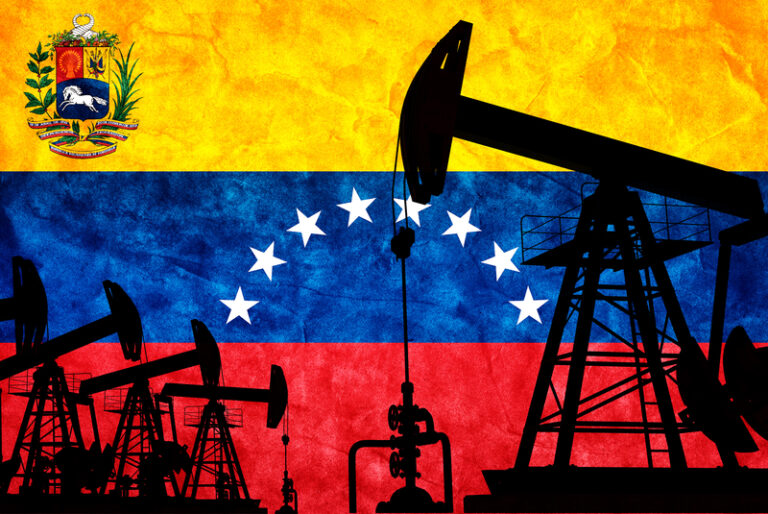
In response to the U.S. operation designed to oust President Maduro, which openly violated the sovereignty of the South American state, many commentators claimed that “international law” had been shattered, without explaining the theoretical foundations or strategic shifts behind such claims. A similar case, on an even larger scale, occurred a few days ago when Washington, under growing pressure from Israel, carried out coordinated airstrikes on Iranian soil, bombing Tehran and killing the bloodthirsty Ayatollah Khamenei. In addition to clearly violating a fundamental rule set out in Article 2(4) of the UN Charter, which prohibits the use of force against a sovereign state, this also violates the Rome Statute of the International Criminal Court, which defines war of aggression as a crime. International law, as we understand it today, has been violated in almost every respect.
However, what appears at first glance to be a simple news story actually hides a far more complex reality: a change in the modus operandi of states that will not only influence so-called geopolitical dynamics, but could also have an impact on our very democratic stability. It is therefore vitally important to trace the course (and internal dynamics) that led to this crisis, analysing the historical dimension within a well-defined theoretical framework. Otherwise, the risk of falling into widespread inaccuracy is very high.
International law has not been defeated by force, but has simply returned to what it has always been in times of hegemonic transition: it has once again become political. It is therefore showing its true nature, namely that its existence coincides solely with the balance of power. And this seems chaotic, incomprehensible, and dangerous because we are not used to it.
The renowned jurist Martti Koskenniemi explains that international law cannot exist beyond politics. The goal is to replace it with neutral and objective rules, but these rules must be interpreted by political actors in order to be applied. Every decision is therefore inevitably political. Ontologically speaking, international law is always caught between the apology of power (if too close to states) and utopia (if too distant).
International law has never been truly neutral. Western states have always had an ambiguous conception of “international law”: When understood as a universal principle, it seems to have been used more recently as a means of justifying their own political agenda rather than as an impartial principle, as demonstrated by the clear inconsistencies in Western responses with regard to the Russian invasion of Ukraine on the one hand (with complete and sacrosanct support for Kyiv), and the West’s ambiguous stance toward Israel on the other, which has never really been condemned following the tragedies in Gaza. Although these positions can be partly explained by analysing the strategic trajectories of the Western bloc since the Second World War (Germany in particular), the notion of international law cannot be presented as universal. In recent years, moreover, the “raison d’état” seems to prevail over international law.
It is therefore essential to distinguish between two very different schools of thought, which since the post-war period have opposed each other’s visions of the international order both in academia and in public debate, and whose clash we are witnessing today more than ever. On the one hand, we find Kant’s idea of perpetual peace, which states that in order to create harmony between nations and equal freedom for all, states should rely solely on universal norms, rules and institutions, which, however, appear to be losing momentum. This effectively confirms the crisis of institutionalism as the real cause of the return to the use of force.
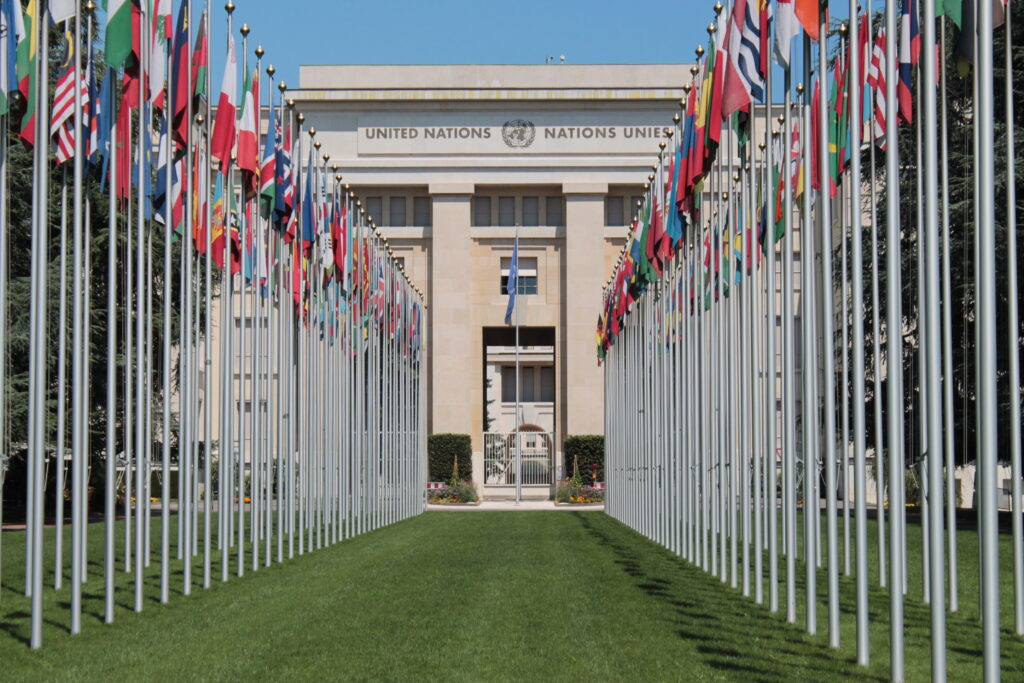
Institutions no longer seem to matter, or rather, they no longer guarantee the stability they promised: the growing ineffectiveness of the UN is increasingly visible, as it fails to establish the conditions necessary for maintaining peace. The new world, born of the total absence of an impartial organisation, seems like a new version of the old world of empires.
And this is where realist theory comes in, according to which universal norms and guaranteeing institutions have always been used by great powers to pursue their interests. In a world without a stable global hegemon, the division of the world into spheres of influence (a region or territory in which a given state has predominant or exclusive control) therefore seems to become the natural consequence.
Since ancient times, the division of power into distinct areas has always proved more stable than a central power governing everything. Except in the case of global hegemony. But as Paul Kennedy teaches us, empires are destined to fall, worn down by the very expansion that once made them strong.
The theory of just war seems to be back in vogue. Or rather, it never really disappeared, except in our deluded minds, which believed that war could be something distant and forgettable. We need not become medieval theologians to recognize that it is through a better understanding of this philosophical doctrine that the recent return to force can be explained.In fact, on the one hand, we are witnessing increasingly clear violations of the ius in bello (the principle that indicates how war should be waged), which, with disproportionate fighting and attacks on civilians, seems to have removed even the minimal ethical constraints from our understanding of war. On the other hand, increasingly wide divergences in the ius ad bellum (when a state may use force) are shattering the very meaning of law, allowing each state to act according to its own interests. But how can all this be explained?
The prohibition of the use of force, a key principle of the post-World War II legal order, is now being challenged by the proliferation of states and actors and by changes in the global balance of power. The prohibition of force has certainly allowed for a period of economic prosperity and cooperation, but has it really prevented conflicts between major powers from breaking out? Some theorists speak instead of the deterrence paradox, according to which Washington and Moscow did not go to war during the Cold War because the effects would have been irreversible. Before that, however, the world once had a relatively stable order, which no longer seems to exist today.
In the absence of a balanced world order, states rely on the grammar of force. The real breakdown began with the American invasion of Iraq ordered by President George W. Bush, who, in the name of alleged “self-defence”, decided to erode a normative system that the United States itself had largely helped to build. It is this precise event that Giorgio Agamben defines as the state of exception replacing the rule of law, thus allowing states to disregard previously established norms. The problem arises when the exception becomes the norm.
This legal paradox has its philosophical roots in theories that are central to contemporary debate and vital to a better understanding of the pervasive unpredictability of our time.
As Italian philosopher Giorgio Agamben points out, the regime of exception, adopted solely as a crisis measure, has become an ordinary technique of governance. Political power is restructured around the absence of law.
The exception thus becomes the interregnum of monsters (to borrow a Gramscian formula), in which a space is created where rules formally apply but power continues to act without constraint. And so it is the (permanent) state of emergency that is the meeting point between law and violence, where the brutality of political power becomes a form of law. When these two concepts, which seem to be polar opposites, intertwine, they inevitably lead to a legal machinery that normalizes violence, where the use of force appears normal. And perhaps there was no need to wake up today, because Guantanamo had already shown us this.
To understand this evolution of international law, which marks its crisis and the end of its universality, we must return to Carl Schmitt. As Anne Sophie Moreau explains in her article published in Philo Magazine, to understand the brutal evolution of contemporary dynamics, the theory of the Third Reich jurist Carl Schmitt proves essential. According to Schmitt, the sovereign is he who decides on the state of exception, because someone must decide when the law ceases to apply. This explains the recurring use of force by Trump, Netanyahu and Putin, acting as sovereign decision-makers in a lawless international system. Furthermore, the return to spheres of influence – as Trump frequently refers to the Monroe Doctrine – perfectly echoes Schmitt’s Grossraum theory, which argues that the international order is divided into spaces dominated by central powers. The dominant powers therefore prohibit external intervention and establish spheres of influence. Perhaps we are therefore returning to a plurality of regional orders, in which universalism loses its relevance.
In The Nomos of the Earth, Carl Schmitt explains how the international legal order arises from a concrete distribution of power across space. Law is therefore merely an expression of the geopolitical order. When this order collapses, international law takes on a new form and loses its stability.
However, as enlightening as it may be from a theoretical point of view, it must be remembered that Schmitt’s conception remains problematic from a normative point of view, especially the concept of ‘Grossraum’, which served as inspiration for the German imperial project, in a vision that was anything but democratic. It is this central dichotomy between democracies and the state of exception that should put us on alert.
As journalist Anne Applebaum explains, the emergence of a new type of authoritarian regimes, which arise in the shifts of power in the international order, is completely opposed to our liberal democracies. Authoritarian practices are adopted within democracies because those who are democratically elected employ authoritarian methods.
Indeed, if a world order based on universalism is no longer viable, we must be careful that this crisis does not contaminate our democracies. Given these shared values, respect for international law could preserve our constitutional order. Or rather, its destruction could lead to an erosion of our understanding of democracy, which we may already be experiencing today. The “Verfassungspatriotismus” (literally, constitutional patriotism) so dear to Jürgen Habermas can be seen as the only antidote to modern brutality. And as President Sergio Mattarella rightly pointed out in his end-of-year speech, the younger generations must look to the Constitution as a guiding star in the shadows of the (post-)modern world. This could be a last call for Europe to become the true stronghold of liberal democracy in the world and of the values Europe claims to uphold, but perhaps Europe will realise this too late.
Bibliography:
Cuzzocrea, A. (2026) “Anne Applebaum: ‘Così il diritto internazionale non conta più’.”la Repubblica, 4 March. Available at:https://www.repubblica.it/cultura/2026/03/04/news/anne_applebauml_iran_pedina_nel_grande_gioco_delle_autocrazie-425198043/ (Accessed: 5 March 2026).
Elden, S. (2010) “Reading Schmitt Geopolitically: Nomos, Territory and Großraum.”Radical Philosophy, 161, pp. 18–26.
Goldmann, M. (2025) “The Boomerang Effect: How Disrespect for International Law Threatens Democracy.” EJIL:Talk!, 23 July. Available at: https://www.ejiltalk.org/the-boomerang-effect-how-disrespect-for-international-law-threatens-democracy/ (Accessed: 5 March 2026).
Humphreys, S. (2006) “Legalizing Lawlessness: On Giorgio Agamben’s State of Exception.” European Journal of International Law, 17(3), pp. 677–687.
Koskenniemi, M. (1990) “The Politics of International Law.” European Journal of International Law, 1(1), pp. 4–32.
Moreau, A.-S. (2025) « Vers la fin du droit international ? Le retour en force de Carl Schmitt ». Philosophie Magazine. Available at: https://www.philomag.com/articles/vers-la-fin-du-droit-international-le-retour-en-force-de-carl-schmitt (Accessed: 5 March 2026).
Petrini, B. (2025) “The prohibition on the use of force: what its erosion tells us about the international system.” IISS Online Analysis, 21 November. Available at:https://www.iiss.org/online-analysis/online-analysis/2025/11/the-prohibition-on-the-use-of-force-what-its-erosion-tells-us-about-the-international-system/ (Accessed: 5 March 2026).
Featured Image: United Nations Headquarters is licensed under CC BY-SA 4.0.